
UNLOCKING THE
SECRETS OF THE BRAIN
Portico Magazine | Summer 2026
From the outside it looks like any other London square: a garden in the middle, a 1970s tower block, a scattering of original Georgian buildings. Yet this unassuming setting is at the centre of one of the world’s leading neurological research communities. Nearby, the Queen Square Brain Bank is home to more than 3,000 donated human brains providing an invaluable resource for research into diseases of the brain.
Our brains are the control centre for every aspect of being alive – breathing, learning, moving. They store our memories, likes, dislikes, dreams and hopes, through a remarkable network of around 100 billion brain cells linked by hundreds of trillions of connections. In fact, the mass of squidgy-looking tissue inside our skulls is more complex than any computer – or any network of computers – ever made. And that’s a problem when you’re trying to work out where it’s going wrong.
The UCL Queen Square Institute of Neurology
The UCL Queen Square Institute of Neurology
Neurodegenerative diseases, such as Alzheimer’s and Parkinson’s disease, are among the leading causes of disability worldwide. They are complex and still not fully understood – making them some of the most challenging disorders to treat. While disease-modifying therapies are beginning to appear, there is still no outright cure for either of them.
Studying the whole brain in detail requires examining it far more closely than is possible in a living person. Scans don’t always give a rounded picture of everything that’s going on in a brain. That’s what makes the Queen Square Brain Bank – which marks its 40th anniversary this year – so valuable.
These 3,000 brains could hold the key to better future diagnosis and treatment of a multitude of neurological conditions, that affect memory, movement, and behaviour.
These brains are a vital source of information for researchers all over the world. But what really goes on behind the scenes?
Who donates their brain – and why?
Imagine that you receive a devastating diagnosis: Alzheimer’s, perhaps, or Parkinson’s. Everyone responds differently to such news. There is no right or wrong way. Some choose to join the Queen Square Brain Bank’s donation scheme – and they find it comforting. They know that deciding to donate their brains could drive discoveries that save countless lives in the future.
And as soon as they sign up, they are helping. Researchers can then study how their disease is progressing. They can track symptoms, biomarkers and disease progression. When the donor dies and donates their brain, those same researchers can then correlate what they find in the brain with what happened in the person’s life.
The donor’s loved ones can choose to sign up to the donation scheme too, as the bank also holds ‘control’ brains with healthy tissue. These are crucial to help researchers understand how a normal brain functions, and what it looks like. Many of these control brains are donated by partners of patients, who want to help find answers to the condition that affected their family member or friend.
The final sample of brain tissue may just look like a faint mark on a slide. But the person who donated it is still very much present to those who study it. Their life story is told under the microscope, in their medical records, in the pages of journals. And as research and treatments are developed, one day, it will be a part of the story of breakthrough science.
How the brain is prepared
When a patient who has agreed to donate their brain dies, the brain is removed as soon as possible. (It needs to be the entire brain, as it’s such a complex organ.)
The Queen Square Brain Bank team liaises with relatives, hospital staff, funeral directors and couriers to ensure the careful donation of the brain with the minimum of distress to families.
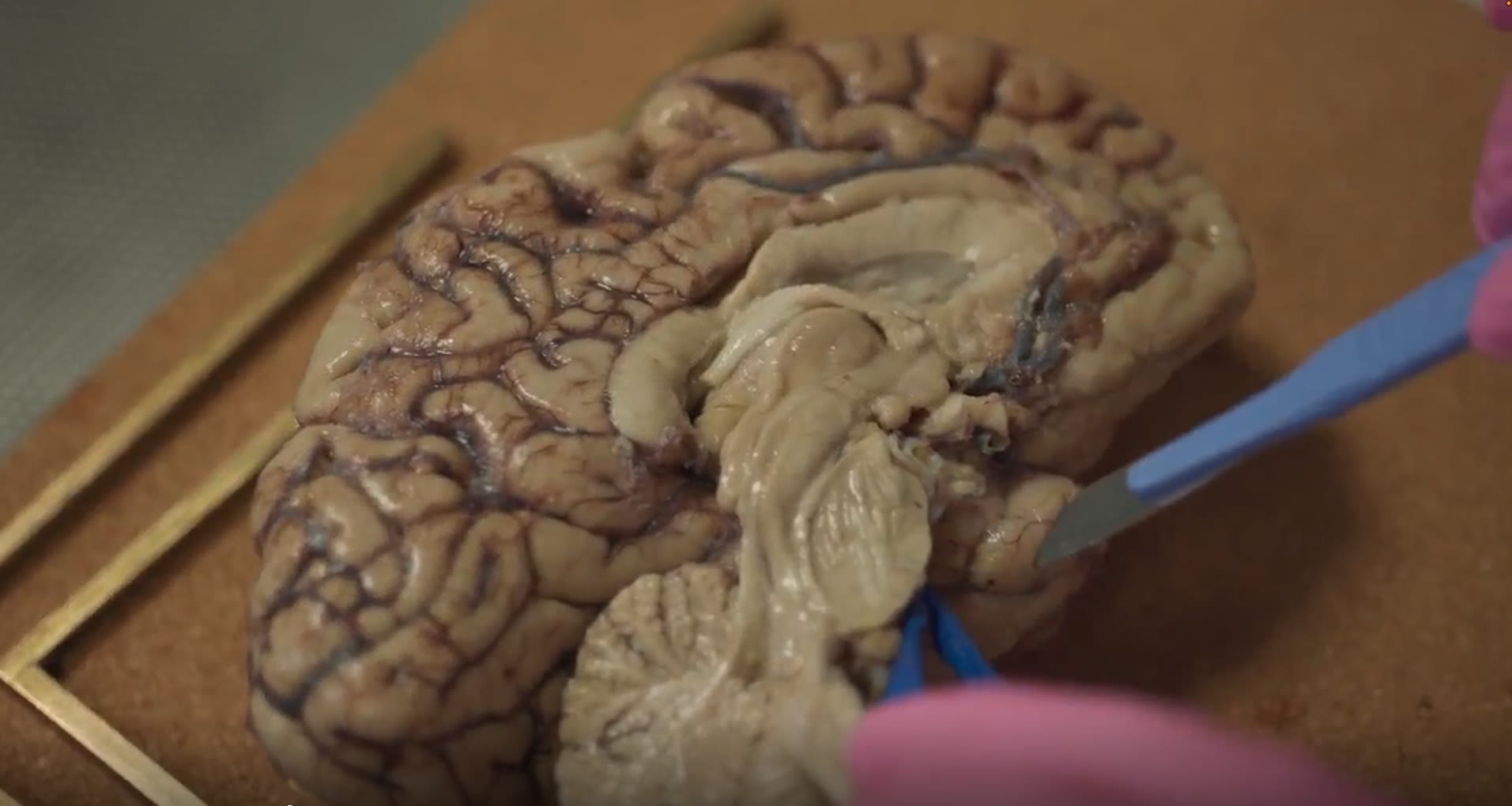
When all the correct procedures have been followed, the donated brain is couriered to the Queen Square Brain Bank.
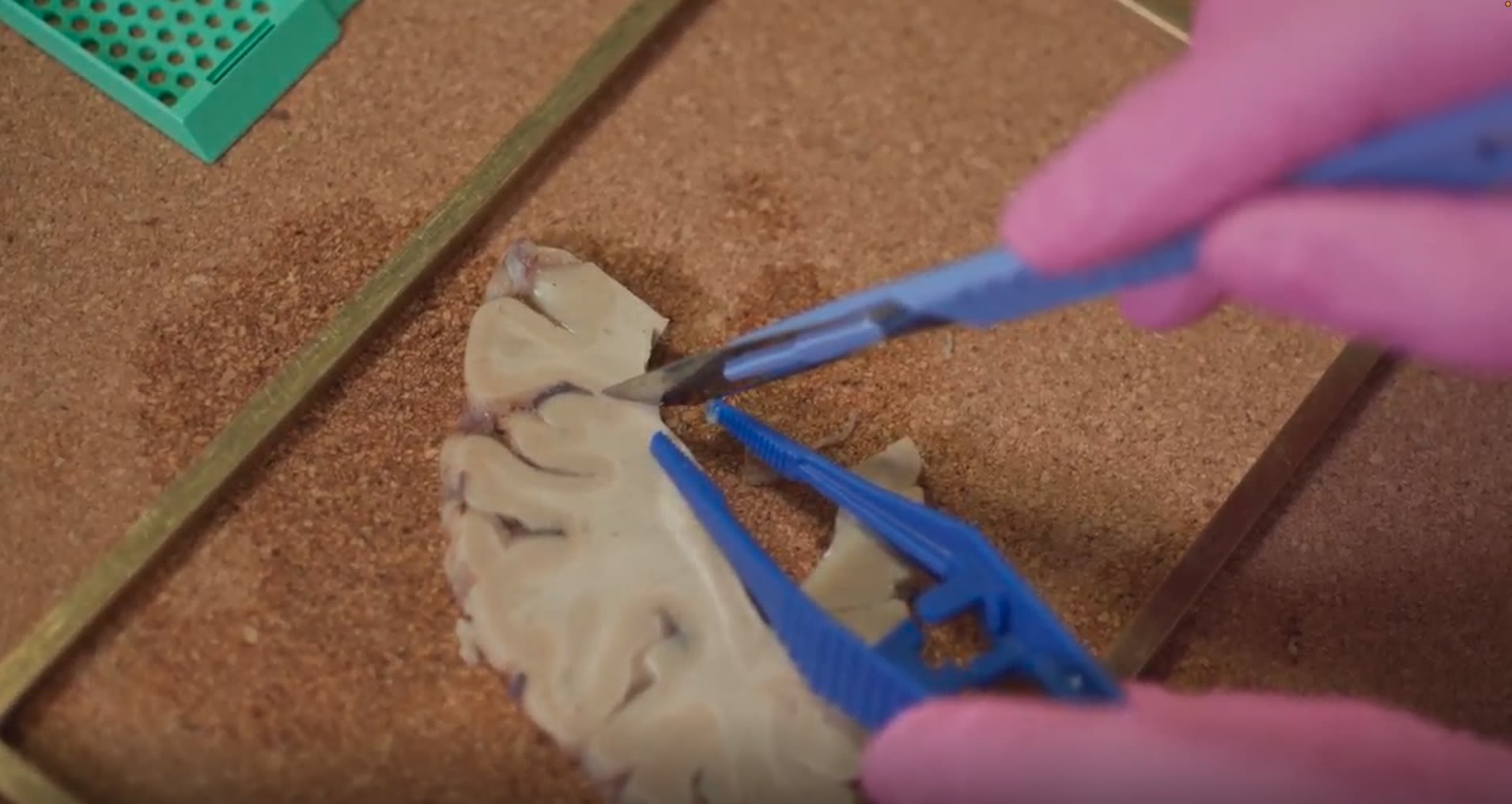
There, it is carefully examined and prepared for long-term preservation. Some tissue is preserved by freezing, while other tissue is fixed and processed into paraffin blocks that can be cut into extremely thin sections and placed on glass slides for detailed study.
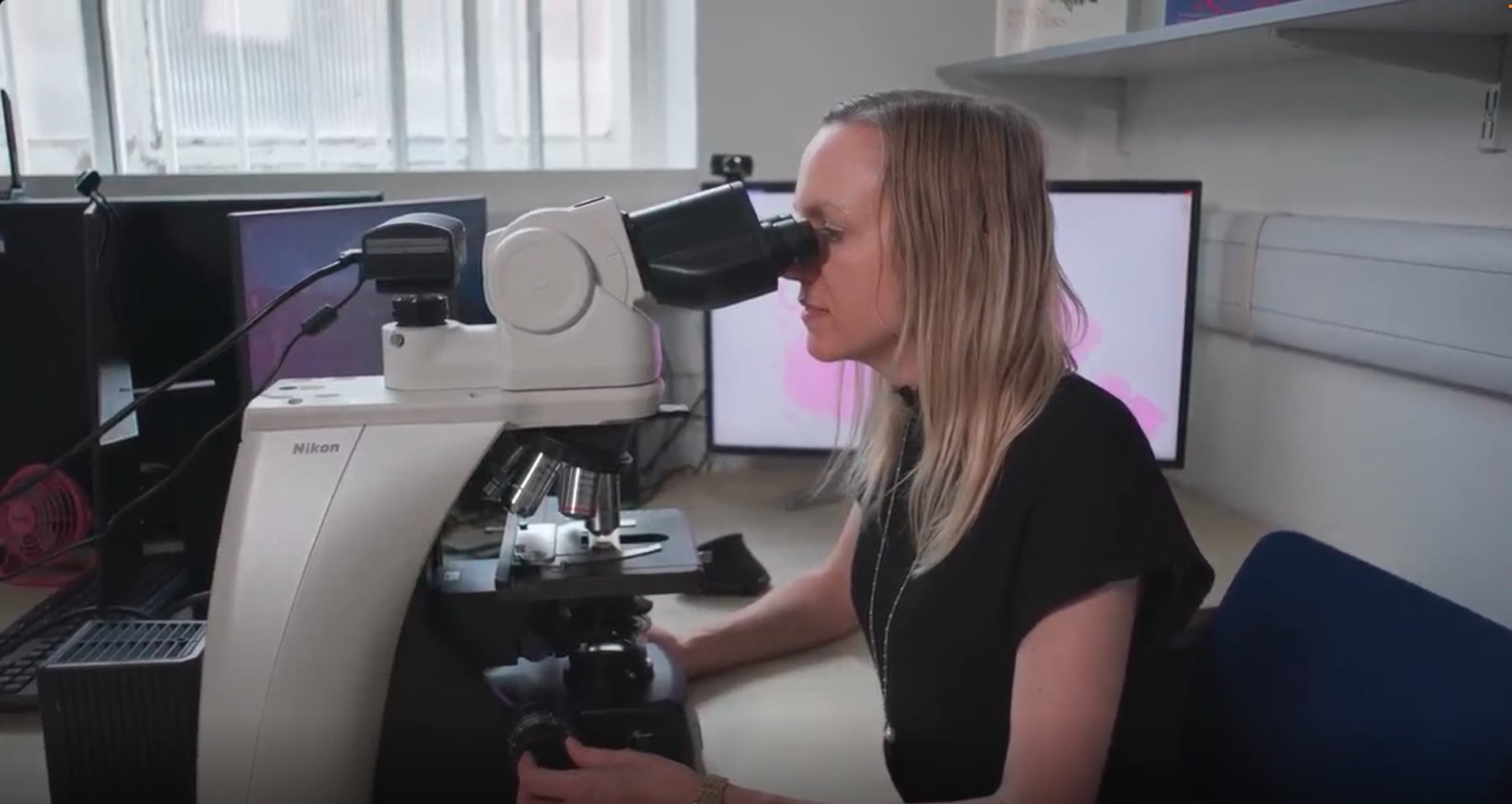
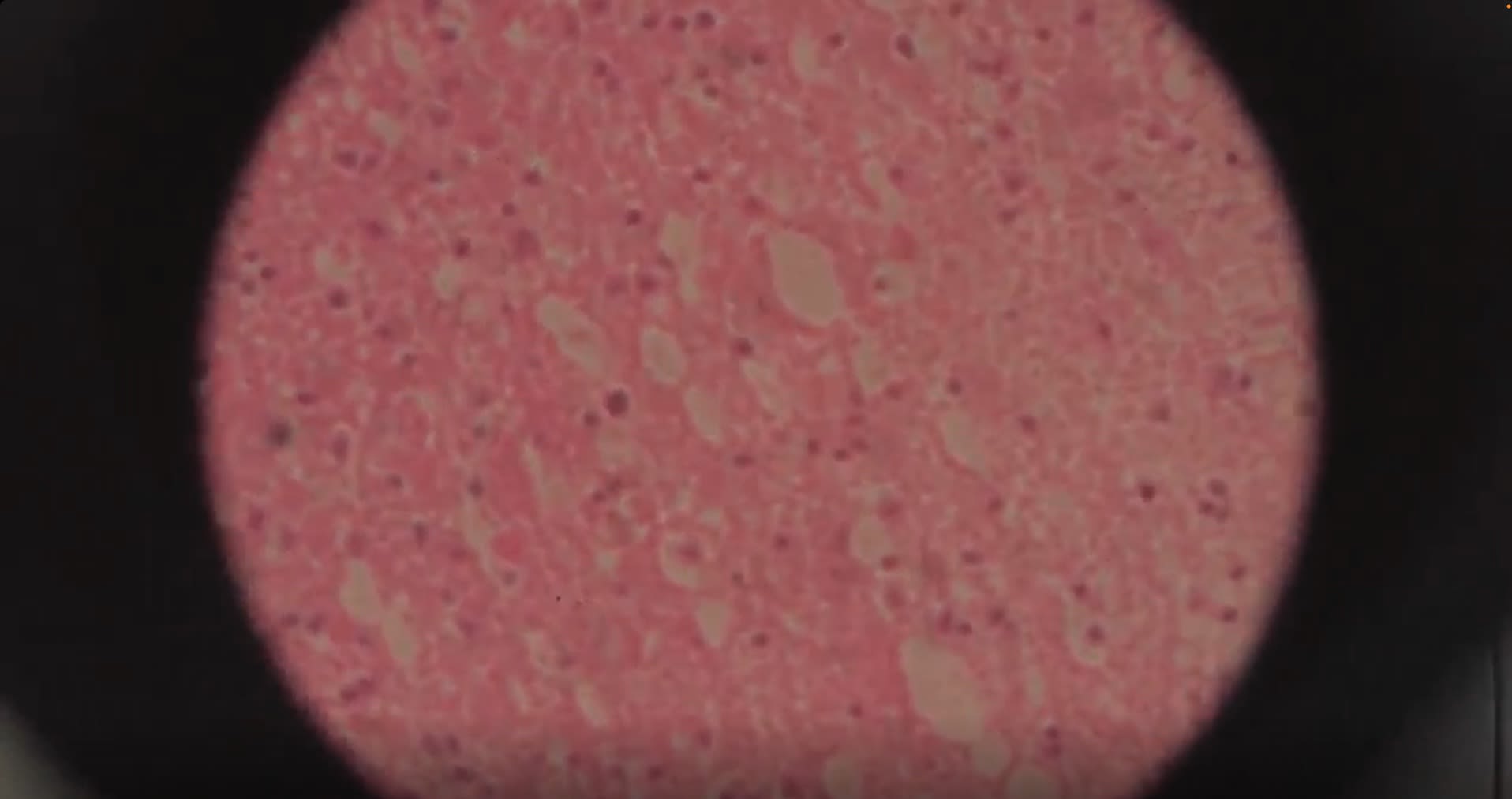
Those slides are stained and examined under a microscope. If the person who donated the brain had a neurological condition, it allows a definite diagnosis of a particular brain disorder to be made.
DNA and RNA can also be extracted from the samples, allowing researchers to study the proteins which play a part in disorders such as Alzheimer’s in far more detail. Studying these molecules helps scientists understand how the brain works, uncover biological changes that occur in disease and identify new molecular pathways that may lead to improved diagnosis and treatment in living patients.
Each sample is recorded and stored with great care, ensuring that researchers requesting samples from across the globe can easily find what they need.
Harnessing the power of AI
The Queen Square Brain Bank is distinguished not only by the size of its collection, but also by the richness of the associated clinical, genetic and digital pathology information.
And now, this unique collection is the basis for a new project that harnesses the power of AI to gain crucial insights from all this information – insights which, it’s hoped, could supercharge the diagnosis and treatment of neurological conditions.
The Reta Lila Weston platform in Biomarker Research and Innovation in Neurodegeneration (Reta Lila Weston BRAIN) is an ambitious initiative that aims to create an AI-enabled research platform. The programme will bring together all the clinical, pathology, genetic and molecular data generated from donated human brain and spinal cord tissue samples held by the Queen Square Brain Bank at the Reta Lila Weston Institute (RLWI).
Researchers are training AI models to analyse these large and diverse datasets, searching for subtle patterns that are hard to detect in any other way. These models will be designed to predict how diseases develop and progress in different individuals while also identifying biological features associated with neurodegeneration.
The hope is that by analysing data at an unprecedented scale, the platform will reveal the factors that influence when disease begins, how it progresses and why it affects people differently. Such insights could support earlier diagnosis, more accurate prediction of disease course and the development of more effective treatments.
“AI will revolutionise the way we study neurodegenerative conditions. With the world’s largest brain tissue collection and world-leading clinical and neuroscience experts, UCL is in a genuinely unparalleled position to harness this transformative technology. Thanks to the Reta Lila Weston Trust for Medical Research, we will now turn possibility into reality and rapidly accelerate our understanding of neurodegenerative disease mechanisms.”
Professor Tom Warner, Chair of Clinical Neurology and Director of the Reta Lila Weston Institute at UCL
So what comes next?
The Queen Square Brain Bank’s data and dedicated researchers have been at the forefront of recent discoveries around the mechanisms of neurodegenerative disease.
It’s now understood, for example, that different neurodegenerative conditions involve different brain areas. Researchers have identified that deposits of specific proteins in the brain lead to cell dysfunction and death: two of those proteins are alpha-synuclein and tau. Now, the Queen Square Brain Bank will help them take the next steps into developing pathways to diagnose and tracking these highly complex diseases.
When the Queen Square Brain Bank was established four decades ago, it was hoped that it would drive forward our understanding of neurological conditions. It’s more than fulfilled that objective. The last 40 years have transformed our understanding of the brain and the diseases that affect it.
With increasingly powerful technologies and one of the world's leading collections of donated brain tissue, the next decades promise to bring further discoveries and new opportunities to improve the lives of patients and their families. The next 40 years will – with the aid of this incredible resource – be more exciting still.
Portico magazine features stories for and from the UCL community. If you have a story to tell or feedback to share, contact advancement@ucl.ac.uk
Editor: Lauren Cain
Editorial team: Ray Antwi, Rachel Henkels, Harry Latter, Chloe Lambdon, Bryony Merritt, Lucy Morrish, Alex Norton, Thrisha Sajeev
Shorthand presentation: Harpoon Productions
Additional copywriting: YBM
Follow UCL



 Built with Shorthand