
Breakthroughs
Here, it's happening
Lab-grown mini-stomachs, reconstructing videos from the brains of mice, unlocking undersea tectonic secrets and the decoding of medieval text. Explore some of the most exciting recent breakthroughs from across UCL’s faculties.
Portico Magazine | Summer 2026
Breakthroughs
Here, it's happening
Lab-grown mini-stomachs, reconstructing videos from the brains of mice, unlocking undersea tectonic secrets and the decoding of medieval text. Explore some of the most exciting recent breakthroughs from across UCL’s faculties.
Portico Magazine | Summer 2026
For 200 years, UCL has been where ideas transform into breakthroughs. From leading scientific discoveries to revolutionising social research to uncovering the stories of our past, UCL's community pushes the boundaries of knowledge and impact to shape the future of our world.
Drawn from across each of UCL's faculties, these breakthrough stories demonstrate the impact of the work and ambition that continue to define us. As we mark UCL200, we are reminded that next world-changing ideas can start here and grow, because at UCL, here it will happen.
Shining a light on the reality of night work inequalities
UCL Social & Historical Sciences
A train worker on shift at night. Credit: Bantar Prakoso for Unsplash
A train worker on shift at night. Credit: Bantar Prakoso for Unsplash
About a quarter of London’s 5.3 million member workforce are typically working between 6pm to 6am. These 1.3 million workers – which include bus drivers, nurses, cleaners, food service workers and delivery drivers – face particular challenges challenges such as pay inequality, safety concerns, transport difficulties, health problems and a lack of workplace dignity, according to a new UCL study.
The UCL Social Data Institute and UCL Urban Laboratory lead the Data after Dark project, combining spatial analysis of cell phone data, worker surveys and in-depth interviews with workers across varying sectors to gain a better understanding of their working patterns, conditions and experiences. The researchers also set out a series of policy recommendations to improve the position of night workers through reforms of UK employment law.
Key findings reveal that 29% of night workers earn below the London Living Wage and 26% work multiple jobs. Additionally, they are at a higher risk of food insecurity with 63% reporting limited access to healthy food and 47% with no access to affordable food during work. The commute times were often longer, with many workers in general not feeling safe commuting in the dark.
Proposed reforms from the researchers include fair wages and conditions, supportive employer practices, a review of transport infrastructure, health support and pilot night-worker hubs to provide rest and welfare spaces for night workers.
Read the full story: Night workers face inequalities in pay, health, safety and dignity
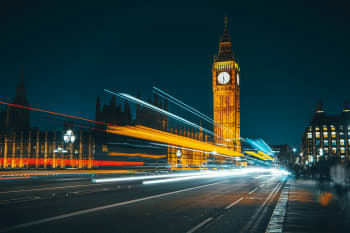
Mini-stomachs mark massive step forward for stomach condition research
UCL Population Health Sciences
Immunofluorescence image of the antral side of a multi-regional assembloid derived from PMM2 patients. Credit: B. Jones, G. Benedetti et al., Nature Biomedical Engineering.
Immunofluorescence image of the antral side of a multi-regional assembloid derived from PMM2 patients. Credit: B. Jones, G. Benedetti et al., Nature Biomedical Engineering.
Researchers from UCL and Great Ormond Street Hospital have created the very first mini-stomach that contains the key elements of the human stomach and mimics the organ’s function. These can model rare genetic stomach diseases and gastric disorders that are poorly understood and allow for testing treatments.
The researchers isolated stem cells from stomach samples and, under special laboratory conditions, grew small organoids of the key components of a human stomach: the fundic region, the body and the antrum to form the mucosa. Each of these was grown separately then ‘assembled’ into a single version, with each component both successfully retaining its function and communicating with each of the other parts. Together, they were able to produce stomach acid, which is crucial for digestion.
After establishing that these mini-stomachs worked, the researchers were able to grow more mini-stomachs from the stem cells of children with a rare stomach condition in order to test treatments. The ability to test organs without impacting a living individual allows for safer, more innovative testing and is a massive step forward in the development of personalised treatments.
Read the full story: Lab-grown mini-stomachs could boost understanding of rare diseases
Measuring Holocaust misconceptions among English school pupils
UCL Institute of Education
A teacher in front of a classroom. Credit: Quilia Z for Unsplash
A teacher in front of a classroom. Credit: Quilia Z for Unsplash
New research from the UCL Centre for Holocaust Education has found that English secondary school students’ knowledge of the basic facts of the Holocaust is lacking, showing a need for a more robust and thorough curriculum on the subject.
Established in 2008 by a founding grant from the Pears Foundation and the Department for Education, the UCL Centre for Holocaust Education is a world leader for research-informed teacher and student education.
The study, which surveyed 2,778 secondary students across England, showed some serious lapses in the general knowledge of the subject. While there was an increase in knowledge of certain facts, such as 73.0% correctly identifying that six million Jews were murdered during the Holocaust and 83.3% knew that this occurred during the 1940s, other facts were less well-known among the students. For example, 90% of students did not know that less than 1% of the German population was Jewish in 1933, while 52.1% were unaware that the epicentre of the killings occurred in Nazi-occupied Poland.
The researchers drew attention to the fact that the National Curriculum does not provide clear guidance on numerous aspects of Holocaust education, such as why it should be taught, the aims of Holocaust education and how it should be taught.
The researchers conclude that now is the time to revitalise Holocaust education to promote better understanding of this atrocity, to prevent the rise of antisemitism and combat the proliferation of misinformation about the Holocaust online.
Read the full story: Misconceptions about the Holocaust persist among England's teenagers
Do you see what the mouse sees?
UCL Life Sciences
Three mice standing side-by-side looking in the distance. Credit: Nikolett Emmert for Unsplash
Three mice standing side-by-side looking in the distance. Credit: Nikolett Emmert for Unsplash
In a new study, UCL researchers reconstructed videos from the brain activity of mice to understand what they see and how sight connects to the brain. This is an important step toward understanding how the human brain interprets signals from the eye.
Using single-cell recordings from mice, the researchers were able to create high-quality reconstructions of videos that were played to the mice. These reconstructions are based entirely on neural activity in the visual cortex using a neural encoding model that predicts activity of individual brain cells. As the mice were shown videos, the team tracked the model while also noting the movements and pupil diameter of the mice.
They then calculated the difference between the brain activity of the mice when they were seeing a video versus when they were seeing a blank screen to detect the actual activity of the brain cells. The scientists could then update pixels of a blank movie through an algorithm, with the output resembling the video shown to the mice. From this, they constructed a 10-second film based on the neural activity as a mouse was shown a new video not previously seen.
The team plans on applying this technique to uncover how the human brain processes visual elements. This will be crucial in understanding how visual representations in the brain deviate from the physical reality around us.
Read the full story: Movies reconstructed from mouse brain activity
2026: Expect abundant fruit and a mild autumn, according to newly discovered medieval text
UCL Arts & Humanities
An example of a prognostic text from 1695. Credit: Internet Archive
An example of a prognostic text from 1695. Credit: Internet Archive
What can a tenth-century text tell us about the forecasts of 2026?
UCL Research Fellow Dr Abigail Pearson identified the first known Syriac version of the Revelation of Ezra, a prognostic text that predicted elements of incoming years.
Often found in medieval almanacs from the ninth century onward, Revelation of Ezra texts would base the fortune and outcomes of things such as harvests, births and war on what day of the week the year began on. Dr Pearson gives the example of: “If the first day of January comes on the Lord’s Day, it makes a warm winter […] (But) young men will die […] (and) something new will be heard about kings and rulers.”
Previous versions in other languages such as Latin, Jewish Palestinian Aramaic and Greek had already been discovered, and yet, despite its wide circulation, no Syriac version had been identified.
While searching through the British Museum catalogue of Syriac manuscripts for documents relating to calendars, Dr Pearson investigated a reference to the manuscript Add. 17149. Despite its slightly damaged conditions, she was able to confirm that it was indeed a Syriac version of the Revelation of Ezra. As for what it means for the coming year, she says that some of the predictions for 2026, which began on a Thursday, are a scarcity of cattle, an abundance of fruit and a temperate autumn.
Read the full story: A newly discovered Syriac version of the ‘Revelation of Ezra’

Giving hope to those with previously untreatable eye condition
UCL of Engineering Sciences
An up-close view of an eye with a brown iris. Credit: Venit Views for Unsplash Images
An up-close view of an eye with a brown iris. Credit: Venit Views for Unsplash Images
A study led by Moorfields Eye Charity and UCL Institute of Ophthalmology indicates that ocular injections containing hydroxypropyl methylcellulose (HPMC) can safely increase the volume of eyes to ease the symptoms of abnormally low eye pressure, known as hypotony. This condition can lead to vision loss and even blindness over time, with many previous treatments only seemingly temporarily alleviating the symptoms.
The previous standard treatment of hypotony, silicone oil injection, was not ideal as it could be difficult to see through and had the potential to be toxic to eye structures. However, HPMC is a low-cost gel used in most eye surgery, and, when used to treat hypotony, can restore the eye’s anatomy and even help patients regain sight. Seven out of eight patients who received treatment with HPMC experienced improvements with vision and eye pressure, thanks to funding from Moorfields Eye Charity that supports the world’s first dedicated hypotony clinic.
Co-author Professor Gus Gazzard (UCL Institute of Ophthalmology and Moorfields Eye Hospital) commented: “This is a truly transformative new therapy that brings hope to patients otherwise without options, for what was previously an untreatable blinding and disfiguring condition. This robust proof of principle study has already exceeded my hopes of what sight recovery might be achievable.”
Read the full story: World-first project shows great promise to treat low eye pressure
UCL Laws professor appointed Specialist Advisor to House of Commons committee
UCL Laws
Two people signing a lease document with an estate agent. Credit: Vitaly Gariev for Unsplash
Two people signing a lease document with an estate agent. Credit: Vitaly Gariev for Unsplash
As the UK’s Housing, Communities and Local Government Committee conducts pre-legislative scrutiny of the draft Commonhold and Leasehold Reform Bill, Nick Hopkins, Professor of Land Laws at UCL, has been appointed as a Specialist Advisor.
The bill’s draft proposes a major development to flat ownership as the Government moves towards replacing the default tenure for purchased flats from leasehold to commonhold. It also reforms leasehold to improve the position of existing leaseholders. This would include measures such as capping ground rents at £250 a year and abolish the threat of forfeiture. The Bill would give homeowners increased security and control over their homes by modernising commonhold ownership.
If passed, the Commonhold and Leasehold Reform Bill would mark an important step to ending the feudal leasehold system by reinvigorating commonhold tenure and even banning leasehold for new flats, thus empowering future homeowners.
Professor Hopkins said: “The draft Commonhold and Leasehold Reform Bill brings a significant reset in what it means to own a flat in England and Wales. I am delighted to be advising the Committee in its vital work in scrutinising the Bill ahead of its introduction into Parliament.”
Read the full story: Professor Nick Hopkins appointed Specialist Advisor to House of Commons select committee

Unlocking AI revolutions in stroke care
UCL Brain Sciences
A pixelated image of a brain. Credit: Shubham Dhage for Unsplash
A pixelated image of a brain. Credit: Shubham Dhage for Unsplash
A virtual trial platform developed by UCL researchers may dramatically improve treatment for patients who have suffered from the most common type of stroke, the ischaemic stroke. This revolutionary platform has the ability to run millions of simulations and provide more personalised care and treatment in a field that can often be one-size-fits-all.
Ischaemic strokes are caused by blood vessels in the brain becoming blocked. Due to the high variability of the human brain, the impact of these strokes can greatly differ in size, location and long-term effects. Current clinical treatments and practice relies on more generalised data from randomised, controlled trials that span a broad group of patients. This makes it so that the average treatment may not be the best option for individual patients.
The research team created an advanced, semi-synthetic virtual trial framework that combined large-scale maps of brain connectivity and function, genetic expression and receptor distribution data with more than 4,000 acute stroke lesion maps. This combination allows researchers to simulate more precise and realistic patterns of disability after a stroke and provide more specific treatments that address the conditions surrounding a particular stroke.
Senior author, Professor Parashkev Nachev (UCL Queen Square Institute of Neurology) said: “Healthcare AI is widely seen as luxury technology, used to automate tasks human beings can do as well or better. But its real value lies in enabling us to describe patients objectively with the richness the complexity of their individuality demands.”
Read the full story: AI-powered virtual trials unlock new era of personalised stroke care
Research shows coinfection of HIV and HBV does not worsen immune response
UCL Medical Sciences
A scientist looking through a microscope. Credit: National Cancer Institute for Unsplash
A scientist looking through a microscope. Credit: National Cancer Institute for Unsplash
A new study led by researchers from the UCL Institute of Immunity and Transplantation shows that patients diagnosed with both HIV and hepatitis B (HBV) can have a stronger immune response with antivirals than patients who singularly have HBV.
One in ten people living with HIV are also diagnosed with HBV, a far higher and disproportionate amount than the general population. The researchers focused on CD8+ T cells, which are white blood cells that are crucial to recognising and killing virus-infected blood cells. Because chronic HBV can wear down CD8+ T cells, doctors worried that this would be more severe with patients who also had HIV.
Examining the CD8+ T cell responses in 61 participants on suppressive antiviral therapy, the researchers found that people coinfected with both HIV and HBV had a higher proportion of CD8+ T cells that retain their ability to respond and renew themselves. This is great news for understanding responses against HBV and designing targeted immunotherapies to address the condition.
This is the first study to comprehensively examine immune responses in people with HBV/HIV coinfection in the current antiretroviral therapy era, and the findings challenge long-held assumptions in the field.
Read the full story: HBV/HIV co-infection linked to stronger immune responses than HBV alone
Earthshattering cause of the swarm of 25,000 earthquakes in Santorini
UCL Mathematics and Physical Sciences
Cracks in the earth near the ocean. Credit: Hongjin Wang for Unsplash
Cracks in the earth near the ocean. Credit: Hongjin Wang for Unsplash
In early 2025, a seismic swarm of over 25,000 earthquakes occurred in the Aegean Sea near Santorini and Amorgos, causing great alarm and prompting a local state of emergency that forced thousands of people to evacuate.
UCL researchers recently analysed this intense seismic disruption to understand the cause of these quakes and improve future eruption forecasting. It was previously unknown as to whether the quakes were caused by volcanic activity or a possible tectonic fault slip. By applying advanced machine learning techniques, the researchers detected and determined the position in the Earth’s crust across the thousands of quakes.
From there, they inferred the underground stress changes that caused the distribution of the earthquakes and imaged the movement of pressurised magma. Sheets of magma had 'sliced' in pulses extending up to 50 kilometres northeast of Santorini at more than 15 kilometres deep below the surface. The magma intrusions, or dikes, shot out of an underground magma reservoir through layers of rock, but lacked the buoyancy to reach the surface.
Co-author Dr Stephen Hicks, based at UCL Earth Sciences, said: “Our technique could be applied to future earthquake swarms almost in real time and could allow us to better forecast the likelihood of volcanic eruptions or larger earthquakes.”
Read the full story: Cause of Santorini earthquake swarm uncovered
A tale of two cities: understanding disconnected urban communities
UCL Bartlett Faculty of the Built Environment
iPhone map applications. Credit: Brett Jordan for Unsplash
A scientist looking through a microscope. Credit: National Cancer Institute for Unsplash
Newly published research conducted by Andrew Renniger, a PhD candidate of the Bartlett Centre for Advanced Spatial Analysis (CASA), examines patterns of limited socioeconomic mixing in US cities. Together with the UCL co-authors, Professor Elsa Arcaute and Professor Neave O’Clery, he identified patterns of segregation utilising GPS data tracking daily movements across 383 US cities from January 2019 to December 2022.
The researchers analysed anonymised data that tracked the actions of millions of US residents as they travelled between homes, businesses, restaurants and other accessible locations. After combining this data with census data on demographics and income, two distinct patterns emerged across the 383 cities.
Wealthier suburban neighbourhoods, which were often majority-white, had fewer visitors from other socioeconomic backgrounds and were isolated from other communities. In city centres, downtown areas contained distinct pockets of residents from other socioeconomic and racial backgrounds. However, these were also isolated and segregated, revealing a lack of interaction with people from different backgrounds.
This study is the first to examine this kind of data in a city-wide scale and has the potential to impact policy-making in the future to encourage more social mixing. These policies can better foster community connection and move towards reducing inequality.
Read the full story: CASA Research in Nature Cities Journal Reveals Urban Segregation Patterns in 383 US Cities

Portico magazine features stories for and from the UCL community. If you have a story to tell or feedback to share, contact advancement@ucl.ac.uk
Editor: Lauren Cain
Editorial team: Ray Antwi, Rachel Henkels, Harry Latter, Chloe Lambdon, Bryony Merritt, Lucy Morrish, Alex Norton, Thrisha Sajeev
Shorthand presentation: Harpoon Productions
Additional copywriting: YBM
Follow UCL



 Built with Shorthand