






Feature | Portico Magazine | Spring 2025
The revolutionary rise of UCL Press
Feature | Portico Magazine | Spring 2025
The revolutionary rise of UCL Press
In just a decade, UCL Press has transformed academic publishing, proving that open access can both be rigorous and globally impactful. As it marks its 10th anniversary, Dr Paul Ayris (Pro-Vice-Provost, Library, Culture, Collections and Open Science) reflects on its origins, achievements and future.
In just a decade, UCL Press has transformed academic publishing, proving that open access can both be rigorous and globally impactful. As it marks its 10th anniversary, Dr Paul Ayris (Pro-Vice-Provost, UCL Library, Culture, Collections and Open Science) reflects on its origins, achievements and future.


From the start, UCL Press was about breaking down barriers.
Traditional academic publishing often locks knowledge behind paywalls, with monographs costing academic institutions and the public alike money and selling just a few hundred copies. I found this deeply frustrating as these works can represent decades of research. As part of UCL’s commitment to open research and scholarship, UCL Press flipped this model of publishing on its head; it was the UK’s first fully open access university press, making publishing more accessible to both to early career researchers looking to get their research published for the first time and experienced scholars alike.



Milestones and impact


The press began with a single platform for research monographs, but it has grown far beyond.
Our publications are now featured on renowned platforms including JSTOR and Google Books, and platforms for open access textbooks.
Our merger with UCL Institute of Education Press, formerly a leading publisher of books and journals in the field of education, has also expanded the reach of UCL Press into new fields.
One of our most exciting projects is the UCL Open Environment, a unique, fully non-commercial, Open Science journal that brings together interdisciplinary research on environmental issues. Instead of splitting topics like climate change, politics and health across multiple journals, we’re creating a space where these conversations can intersect and be impactful.
We’ve also developed an open-access textbook programme, which has been incredibly well-received. Students often tell us how challenging it is to afford required textbooks and we’re working to change that.
Our goal is to provide free, high-quality textbooks for every UCL course, ensuring that cost is never a barrier to learning.
The Press began with a single platform for research monographs, but it has grown far beyond.
Our publications are now featured on renowned platforms including JSTOR and Google Books, platforms for open access textbooks and journals and a merger with UCL Institute of Education Press, formerly a leading publisher of books and journals in the field of education, expanded the reach of UCL Press into new fields.
One of our most exciting projects is the UCL Open Environment, a unique, fully non-commercial, Open Science journal that brings together interdisciplinary research on environmental issues. Instead of splitting topics like climate change, politics and health across multiple journals, we’re creating a space where these conversations can intersect and be impactful.
We’ve also developed an open-access textbook programme, which has been incredibly well-received. Students often tell us how challenging it is to afford required textbooks and we’re working to change that.
Our goal is to provide free, high-quality textbooks for every UCL course, ensuring that cost is never a barrier to learning.


“Publishing an open access textbook with UCL Press has greatly benefitted our students. It's quite extraordinary to think that students have read our book in places where they may not have access to Scandinavian Studies programmes. It's been a great experience to work with the team.”
Professor Jakob Stougaard-Neilsen, School of European Languages, Culture and Society and co-editor of Introduction to Nordic Cultures

One of the most rewarding aspects of leading UCL Press has been seeing the global impact of our work. Our publications have been downloaded in every corner of the world, from major research institutions in the United States to small universities in developing countries.
For example, Professor Daniel Miller’s work on social media has been particularly influential. How the World Changed Social Media, written by a team of anthropologists led by Miller, has been downloaded more than 900,000 times and translated into multiple languages, including Tamil and Hindi. This kind of impact would have been unimaginable under the traditional publishing model, where high costs and limited distribution often restrict access to a small, privileged audience. This reach is a testament to the power of open access and the universal appeal of UCL’s research.
When I started UCL Press, I hoped we might reach 10,000 downloads a year. Today, we average more than 175,000 downloads every month.
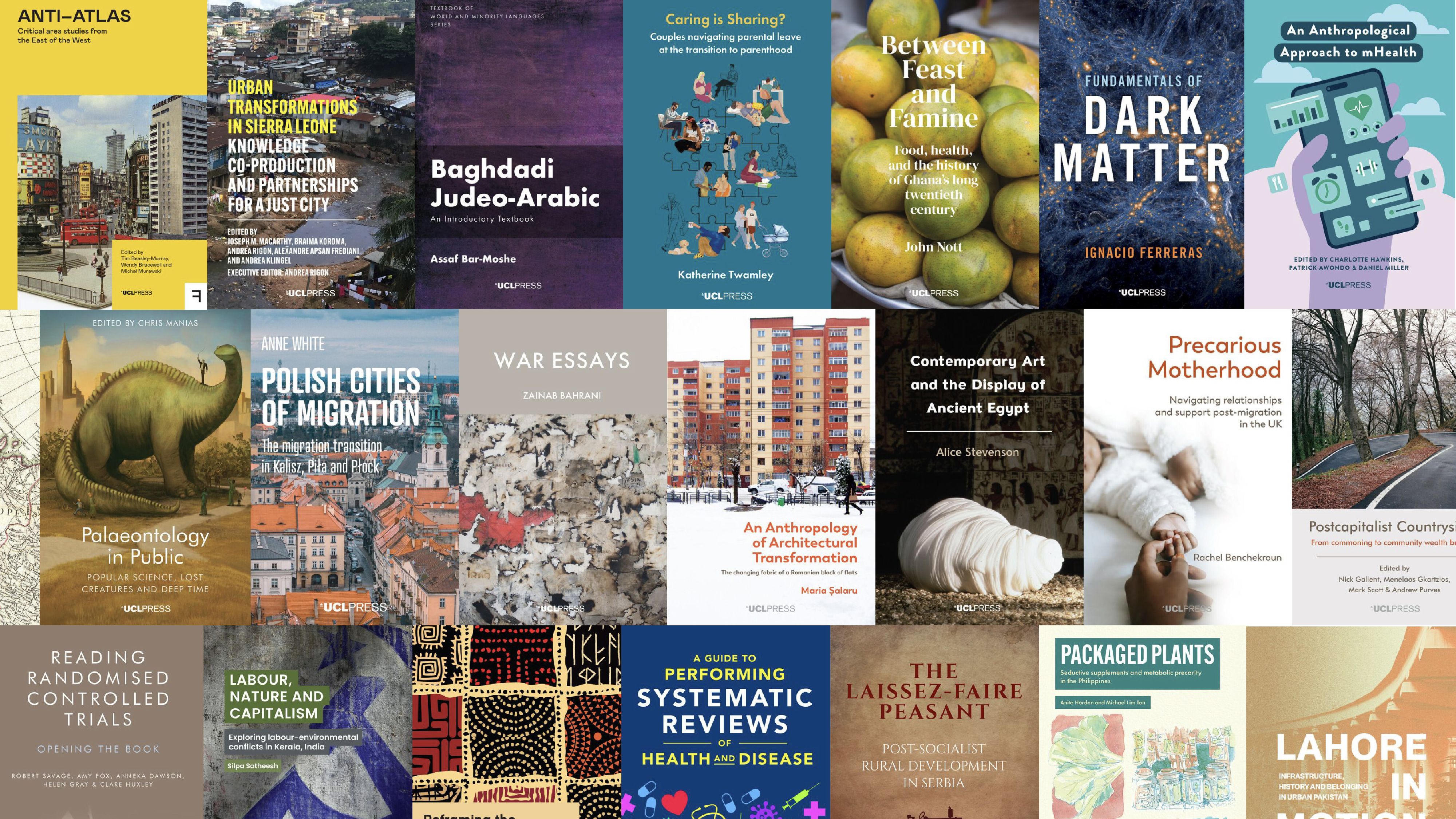
Top UCL Press Publications




The future of UCL Press


Of course, the journey hasn’t been without its challenges. When we first launched UCL Press, there was some scepticism about whether we could compete with established commercial publishers.
After all, many of these publishers have been around for centuries, and they have well-established reputations. But this has worked in our favour as we've been able to be more intentional, proving that open access can be just as rigorous and high-quality as traditional publishing. By employing professional publishers and adhering to strict peer-review standards, we’ve built a reputation for excellence and resources. The numbers speak for themselves: with over 350 titles published and an average of 175,000 downloads per month, UCL Press has become a major player in the academic publishing world.

As we celebrate our 10th anniversary, I’m excited about the future. UCL Press has come a long way, but there’s still so much more we can do.
Advances in generative AI could revolutionise multilingual publishing, making UCL’s research accessible to even more people. We’re also exploring new ways to support early-career researchers and expand our educational offerings.


UCL Press demonstrates the power of open access. It’s not just about numbers, it’s about impact.
It’s been incredible to see how UCL’s research has resonated globally, and it’s a testament to the importance of making knowledge freely available. I am personally incredibly proud about making knowledge accessible to everyone, regardless of their background or circumstances.
Dr Paul Ayris is Pro-Vice-Provost (Library, Culture, Collections, Open Science), Chief Executive of UCL Press, former President of LIBER (Association of European Research Libraries) and Chair of the LERU Open Science Ambassadors (League of European Research Universities). His book, Thomas Cranmer’s archiepiscopal register, is due to publish in January 2026 by UCL Press.


Portico magazine features stories for and from the UCL community. If you have a story to tell or feedback to share, contact advancement@ucl.ac.uk
Editor: Lauren Cain
Editorial team: Ray Antwi, Laili Kwok, Harry Latter, Bryony Merritt, Lucy Morrish, Alex Norton
Shorthand presentation: Harpoon Productions
Additional design support: Boyle&Perks
Follow UCL


 Built with Shorthand