
Students and South Africa: UCL and anti-apartheid campaigns
Dr Sam Blaxland reveals how UCL student activism in response to South African apartheid left a lasting impact.


People | Portico Magazine | Autumn 2025
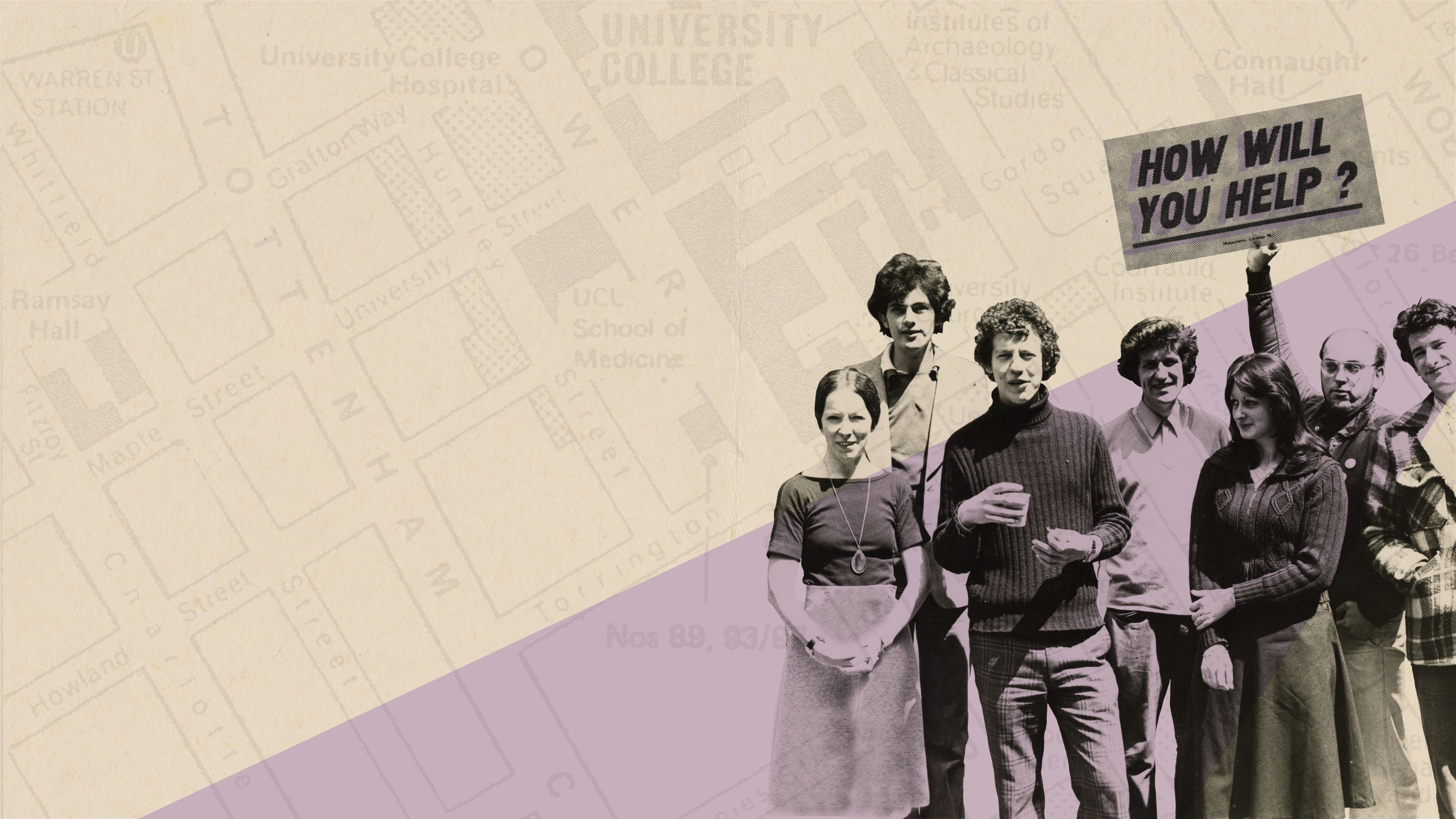

Student life in London has always had a political dimension, from debates about the slave trade and Catholic emancipation in the early nineteenth century, to discussions about tuition fees and Covid-19 in the twenty-first. However, some periods were particularly lively.
The 1960s witnessed a resurgence in political engagement, which continued into the 1970s and 1980s. The Vietnam War, nuclear weapons, trade unions, miners’ strikes, and the AIDS crisis all stirred up passions for many students at UCL. However, apartheid South Africa had a particular impact.
Students engaged closely with the injustices of racial segregation and took thoughtful, practical steps to try and help students in South Africa. Initially, this was done despite opposition from university authorities. Between the 1960s and 1990s a flagship scholarship scheme orchestrated by UCL's students’ union funded a series of Black South Africans to study in London.



Early activism
Student awareness of South Africa developed at the end of the 1950s, when the apartheid government began to introduce racial segregation in universities. The first boycotts of South African products by UK students took place in 1959. In extraordinary footage captured by UCL’s Film Society, processions of students half a mile long, some playing trombones and drums, can be seen walking through central London in protest. For many students at the time, aware of the liberal ethos underpinning UCL’s foundation, “the admission or exclusion of a student on the basis of the colour of his skin is quite contrary to everything that University College London represents”.
To begin with, however, university authorities were nervous about students’ engagement with the topic. A proposed exhibition about South Africa in the cloisters was turned down “with regret” by the Provost, Ifor Evans, because it was a “political issue” that might open the floodgates to a range of other demonstrations.
But this did not deter students. Concern about South Africa fused with a growing interest in and greater understanding of the civil rights movement in the USA, the fear of nuclear weapons, and military action in Vietnam. Further anti-apartheid marches took place in the early 1960s and a Joint Action Committee Against Racial Intolerance was set up at UCL in 1964.
Plans for a scholarship scheme to fund a student from South Africa to come to London were spearheaded by the Students’ Union President, Roger Lyons. He and the committee raised funds, convinced the university’s College Committee Chairman Lord Strang to be the appeal’s patron, and held rallies in the main quadrangle. The most important rally was held in May 1964, attracting a huge crowd that was addressed by speakers from both major political parties. The anti-apartheid campaigner and former Archbishop of Cape Town Joost de Blank told the audience that the scholarship fund was “of desperate and crucial importance”. Students who were there at the time remember it vividly 60 years later.
“He’s coming over to be a student”
Lyons’s successor as Union President, Tom McNally, welcomed the first South African scholar, Lyttleton Mngqikana, to UCL in 1965. One student later reflected on how the scheme was handled delicately, with McNally cautious of not making Mngqikana “a kind of hero” by throwing him a big dinner, because ultimately “he’s coming over to be a student”.
Interviewed after his studies, Mngqikana reflected on how “the scholarship has given me an opportunity to advance my education … it has widened my view of education … future scholarships will be useful for a future South Africa”.
Still, UCL authorities remained wary of the political nature of the scholarship, making no official mention of it in its early years.
Such a scheme might have fizzled out once this initial victory was won. However, backed by the National Union of Students (NUS), anti-apartheid campaigning continued to be a top priority for students. A series of further rallies at UCL followed. One in 1967 was attended by 600 people who crowded into the quadrangle. On this occasion the new Provost, Lord Annan, publicly backed the scheme – evidently the mood among those leading UCL was shifting.
Alongside him was the Conservative MP Sir Edward Boyle, although some Conservative students were not so keen on the scheme. Indeed, the scholarship scheme should not obscure the fact that many people, including students, continued to be victims of racial discrimination in London in this period.
Even so, large-scale rallies were supplemented by other campaigning methods, including teach-ins, where experts aimed to raise awareness. A second scholar, Seiso Liphuko, arrived in 1968, and was also welcomed at the airport by the then Students’ Union President, John Shipley – who, like McNally, would later become a member of the House of Lords.
Early activism
Student awareness of South Africa developed at the end of the 1950s, when the apartheid government began to introduce racial segregation in universities. The first boycotts of South African products by UK students took place in 1959. In extraordinary footage captured by UCL’s Film Society, processions of students half a mile long, some playing trombones and drums, can be seen walking through central London in protest. For many students at the time, aware of the liberal ethos underpinning UCL’s foundation, “the admission or exclusion of a student on the basis of the colour of his skin is quite contrary to everything that University College London represents”.
To begin with, however, university authorities were nervous about students’ engagement with the topic. A proposed exhibition about South Africa in the cloisters was turned down “with regret” by the Provost, Ifor Evans, because it was a “political issue” that might open the floodgates to a range of other demonstrations.
But this did not deter students. Concern about South Africa fused with a growing interest in and greater understanding of the civil rights movement in the USA, the fear of nuclear weapons, and military action in Vietnam. Further anti-apartheid marches took place in the early 1960s and a Joint Action Committee Against Racial Intolerance was set up at UCL in 1964.
Plans for a scholarship scheme to fund a student from South Africa to come to London were spearheaded by the Students’ Union President, Roger Lyons. He and the committee raised funds, convinced the university’s College Committee Chairman Lord Strang to be the appeal’s patron, and held rallies in the main quadrangle. The most important rally was held in May 1964, attracting a huge crowd that was addressed by speakers from both major political parties. The anti-apartheid campaigner and former Archbishop of Cape Town Joost de Blank told the audience that the scholarship fund was “of desperate and crucial importance”. Students who were there at the time remember it vividly 60 years later.


“He’s coming over to be a student”
Lyons’s successor as Union President, Tom McNally, welcomed the first South African scholar, Lyttleton Mngqikana, to UCL in 1965. One student later reflected on how the scheme was handled delicately, with McNally cautious of not making Mngqikana “a kind of hero” by throwing him a big dinner, because ultimately “he’s coming over to be a student”.
Interviewed after his studies, Mngqikana reflected on how “the scholarship has given me an opportunity to advance my education … it has widened my view of education … future scholarships will be useful for a future South Africa”.
Still, UCL authorities remained wary of the political nature of the scholarship, making no official mention of it in its early years.
Such a scheme might have fizzled out once this initial victory was won. However, backed by the National Union of Students (NUS), anti-apartheid campaigning continued to be a top priority for students. A series of further rallies at UCL followed. One in 1967 was attended by 600 people who crowded into the quadrangle. On this occasion the new Provost, Lord Annan, publicly backed the scheme – evidently the mood among those leading UCL was shifting.
Alongside him was the Conservative MP Sir Edward Boyle, although some Conservative students were not so keen on the scheme. Indeed, the scholarship scheme should not obscure the fact that many people, including students, continued to be victims of racial discrimination in London in this period.
Even so, large-scale rallies were supplemented by other campaigning methods, including teach-ins, where experts aimed to raise awareness. A second scholar, Seiso Liphuko, arrived in 1968, and was also welcomed at the airport by the then Students’ Union President, John Shipley – who, like McNally, would later become a member of the House of Lords.

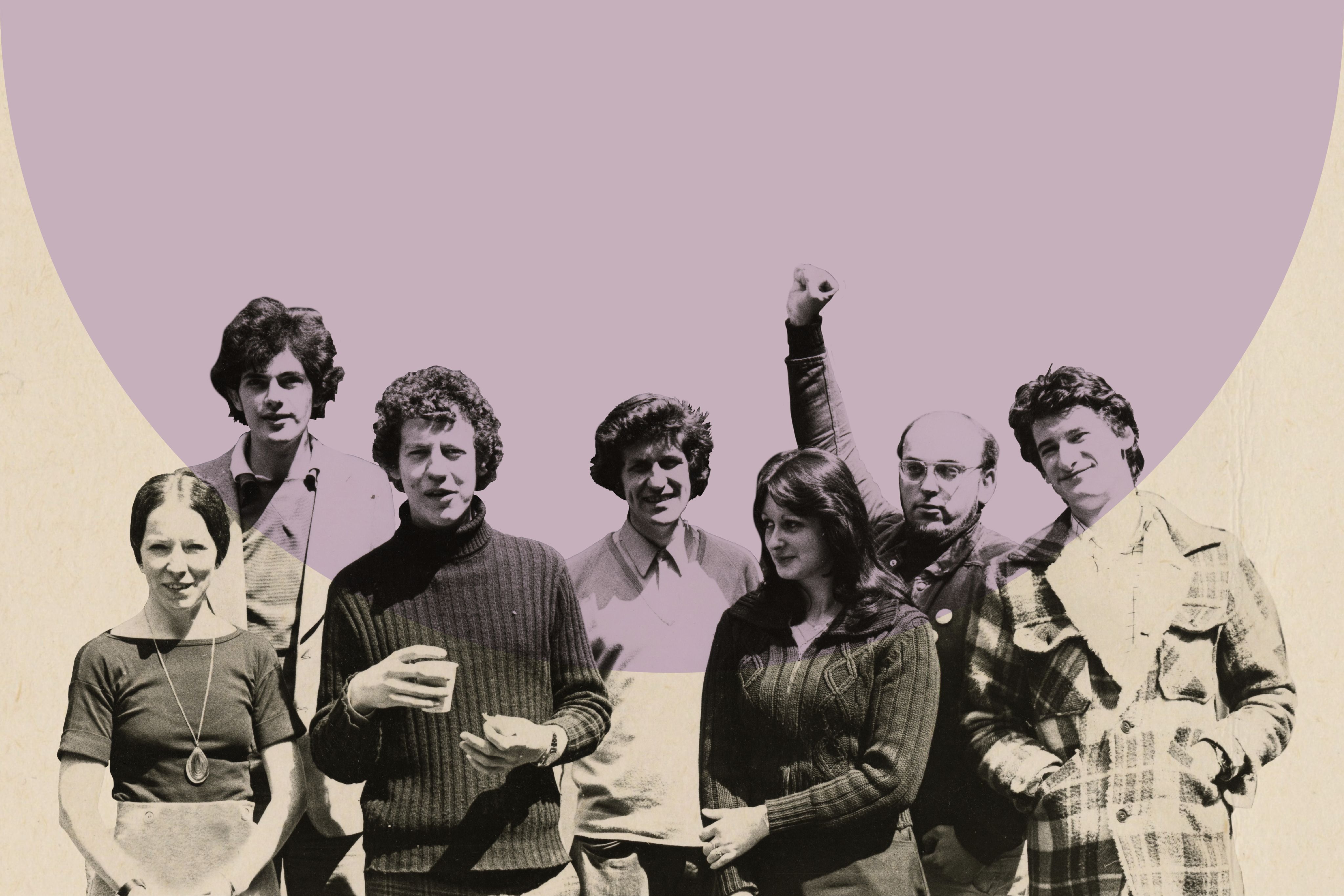
Legacies of the movement
Students also engaged with apartheid-related issues closer to home. The University of London, of which UCL was a college, had forged new ‘special relations’ with university colleges from the old empire. Links with the apartheid state of Rhodesia (now Zimbabwe) proved most controversial. UCL students staged a protest over this issue in 1969.
In chaotic scenes that were later described as ”the most serious thing that has happened” in student life that decade, students tried to force their way into the university’s headquarters in Senate House, where they clashed with security staff. One UCL student who managed to enter, Richard Saville, was beaten by, in the words of the student press, “four thugs dressed as porters”.
Anti-apartheid campaigning stepped up in the 1970s and into the 1980s. This time, the focus was on companies that invested in South Africa. Especially high profile was the “Don't Bank with Barclays” campaign. Student publications outlined “the world of misery and exploitation” under apartheid, showing readers the difference in land allocation, share of national income and per capita spending on education between white and Black people in South Africa. They stated: “behind the statistics are real people”.

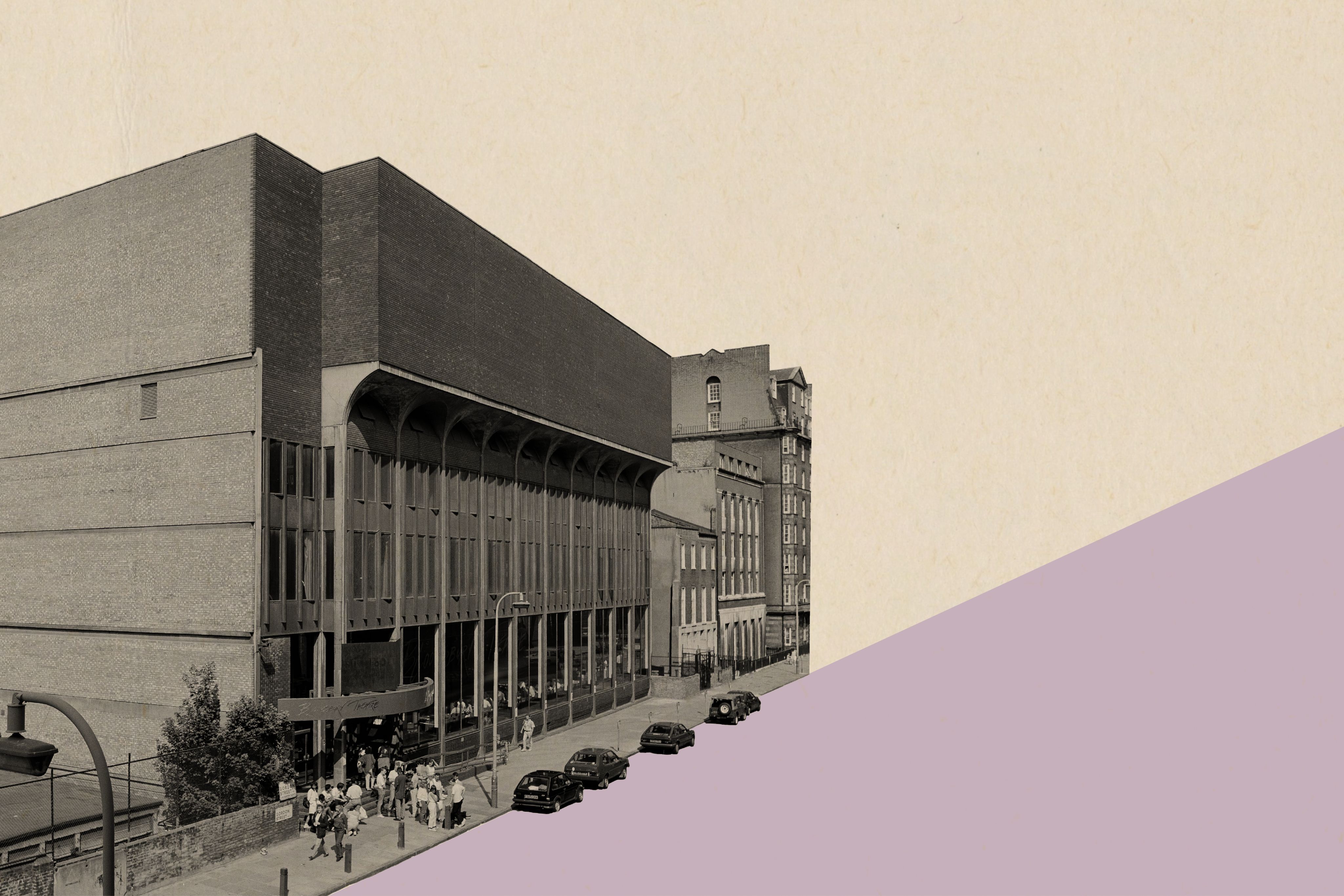
Similar campaigns were taking place at nearby institutions. At the Institute of Education, which was yet to join UCL, students organised collections of pens, papers and medicines for South Africa, as well as showing films and organising pickets of South Africa House.
In 1985, they also established a fund for South African students “who are not eligible for study grants”. Organised in conjunction with the World University Service (WUS), an educational rights charity, this also provided a scholarship to a student from Namibia, which at the time was under occupation by South Africa.
The release of Nelson Mandela from prison in 1990 was a momentous moment for generations of students whose politics had been shaped by the anti-apartheid movement. UCL’s scholarship scheme continued even as the apartheid state was dismantled after 1994, citing the negative legacies of apartheid for Black students. By 1992 a seventh scholar had come to London.
The final scholar, who arrived at the end of the 1990s, reflected that it was “refreshing to realise that you don’t have to think along racial divisions … I’m meeting people from all over the world … studying in a cosmopolitan place like London allows you to cut to the basic truth about human beings, that we are all the same”.
The South African Scholarship appeal leaves a long legacy at UCL. It shows not only that students can care passionately about a moral cause, but also design effective, pragmatic measures to make change. This is far removed from the stereotypes of overly idealistic, radical, or even lazy, students from these periods. And while most students weren’t especially political, anti-apartheid action remains formative for generations of London students.
Dr Sam Blaxland is Lecturer in Education at the UCL Institute of Education.
This is an edited extract from the forthcoming book ‘Student London: A New History of Higher Education in the Capital’, co-authored by Professor Georgina Brewis and Dr Sam Blaxland, which will be published in 2026.
We're committed to opening up access to a UCL education to students who are unable to study in their home country.
The UCL Humanitarian Scholarships enable students who are at serious risk or displaced due to armed conflict to pursue full-time Masters degree studies at UCL
Donate to the UCL Humanitarian Scholarships scheme
To learn how you can expand the Humanitarian Scholarship scheme, please contact advancement@ucl.ac.uk


Portico magazine features stories for and from the UCL community. If you have a story to tell or feedback to share, contact advancement@ucl.ac.uk
Editor: Lauren Cain
Editorial team: Ray Antwi, Rachel Henkels, Harry Latter, Bryony Merritt, Lucy Morrish, Alex Norton
Shorthand presentation: Harpoon Productions
Additional design support: Boyle&Perks
Follow UCL


 Built with Shorthand