
Inspired By: Achala Moulik
A life in chapters
Achala Moulik (UCL Economics BSc 1962) shares the stories and experiences that have shaped her life, from seeing independence come to India in 1947 and studying at UCL in the early 1960s, to working as a government bureaucrat and building a second career as a writer.


People | Portico Magazine | Autumn 2025
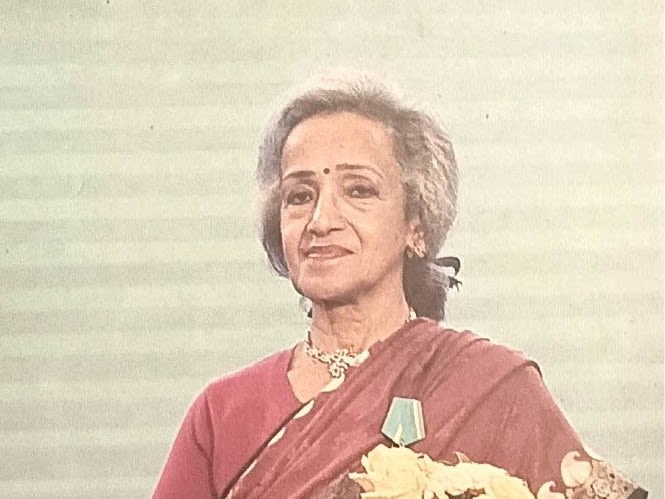

I was born in 1941 in Kolkata, which was once called the second city of the British Empire. My earliest memories are set against the traumatic backdrop of the Partition. We were living on a geopolitical and religious fault line. In 1947, the province of Bengal was cleaved in two: Kolkata, with its Hindu majority, remained in India, while Dhaka, with its Muslim majority, became part of East Bengal (later to become Bangladesh).
Both sides of my parents’ families lived in East Bengal before Partition. They were affluent landowners who were suddenly uprooted, forced to condense their lives into a single suitcase and cross the border to join us in our modest flat. My parents opened our home to my aunts, uncles and cousins.
Along with those shadowy memories, I also recall happy adventures in Himalayan resorts which bore the picturesque stamp of the British Raj. My parents enjoyed taking us there, where British Raj hotels coexisted with ancient temples dedicated to Lord Shiva; where Sanskrit chants at dawn and Western dance melodies from the hotels at night could be heard.
Crossing continents
Soon after India’s independence in August 1947, my family relocated to Washington D.C. My father, a scholar fluent in five languages and who had previously served as official interpreter for Subhas Chandra Bose – a key figure in the Indian Independence Movement – was appointed First Secretary at India’s first embassy there.
My father’s diplomatic postings later took us to New York, Tokyo, Rome and London, where I attended UCL: a time I consider among my happiest years.

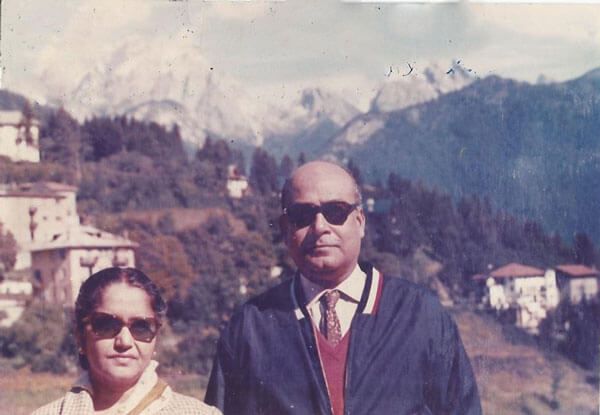
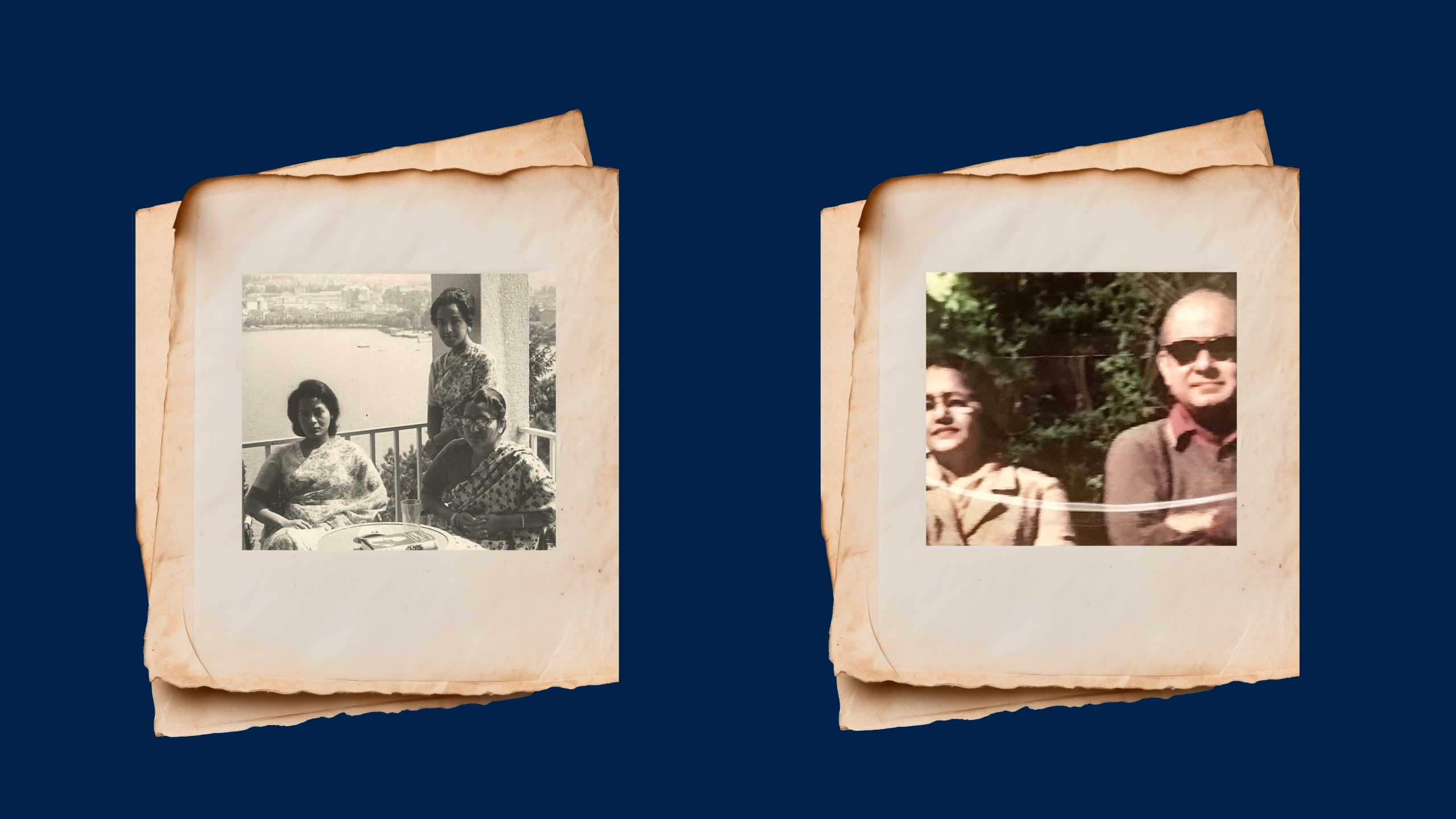
Achala's mother and father in the Swiss Alps. Image courtesy of Achala Moulik.
Achala's mother and father in the Swiss Alps. Image courtesy of Achala Moulik
Living in many cities around the world – and I hope this doesn’t sound self-congratulatory – enabled me and my siblings to have wider horizons and develop an affinity with people of different nationalities and creeds, to realise that humanity is united by the same aspirations for peace and progress and that elusive thing called happiness.
It is a privilege to be able to enter many worlds. I believe this experience enabled me to write about the history and culture of many lands far removed from my own, including England, Russia, Italy, Spain and West Asia.


Speaking my mind
After passing the Ordinary and Advanced level examinations at Hendon County Grammar School in North West London, I began my studies at UCL in 1959. Economics was partly chosen for me; my parents felt it was a “sensible” choice, one that would offer broad career prospects. I was initially drawn to the idea of studying Slavonic Studies. My fascination with Russia had begun earlier, when, as a little girl, I received a copy of Letters from Russia by Rabindranath Tagore – the Nobel Prize-winning Indian poet and musician, who studied law at UCL in 1880 and whose work has profoundly influenced my thinking.
Fortunately, the course at UCL offered the freedom to explore beyond the core curriculum. I took modules in political science, history, political thought and international law. The syllabus provided a window into the contemporary world and helped me engage with the major socio-economic questions of the time.
The unconditional offer of a place at UCL came as a surprise to me. I later learned that the academics were struck by my candour in expressing my beliefs. During the interview, I was asked why there was such poverty in India. I described the depredations of the East India Company and the ruinous economic policy thereafter.
This commitment to independent thinking, respect for difference and diversity, and fair play at UCL was evident to me throughout my degree years. I was taught by brilliant and erudite academics with diverse viewpoints. There was no animosity or hostility, just thoughtful disagreement. I remember discussions around Cold War policy and the United Nations Operation in the Congo. They set an example of tolerance, welcomed open discourse and encouraged students to engage with differing perspectives.
"I was taught by brilliant and erudite academics with diverse viewpoints. There was no animosity or hostility, just thoughtful disagreement."

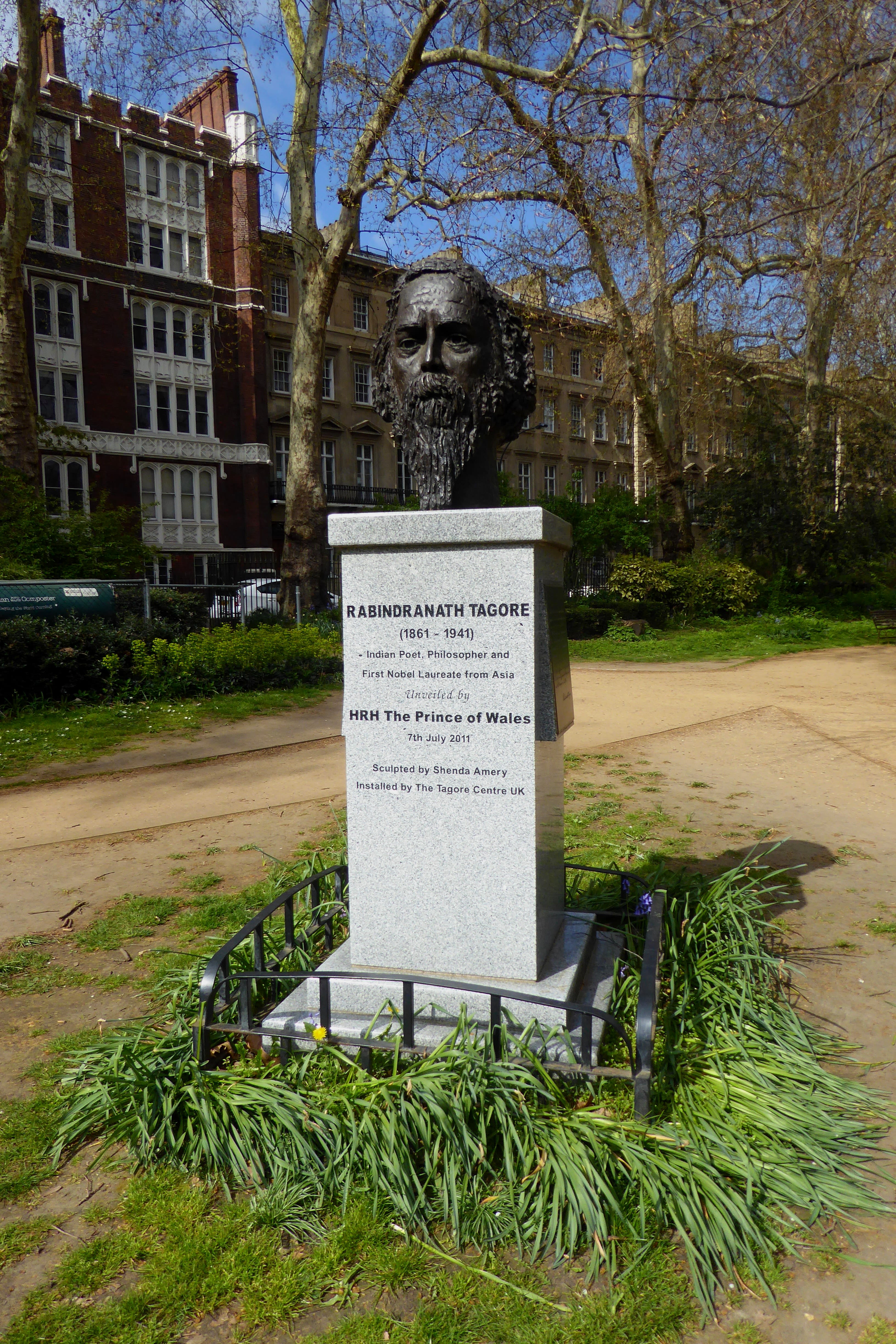
Bronze bust of Rabindranath Tagore, located in Gordon Square, Bloomsbury.
Bronze bust of Rabindranath Tagore, located in Gordon Square, Bloomsbury.
Magical years in London
My parents wanted their three offspring to study in England: a choice that carried a certain irony, as my father held staunch anti-imperialist beliefs. But he and my mother were convinced that British academia offered an unparalleled standard of excellence. So my siblings came to study in London too. My parents called it the “Golden Triangle”: me at UCL, my older sister at LSE and my younger brother at King's College.
As students, my sister Aloka and I lived in Canterbury Hall on Cartwright Gardens, an intercollegiate hall of residence for the University of London. Being in a grand cosmopolitan city like London brought a certain magic and drama. Beyond my academic pursuits, there was a wealth of culture nearby: the Royal Festival Hall, the National Theatre and Covent Garden were all within easy reach from Bloomsbury.

I recall great excitement when President John Kennedy, who was on a state visit, was to visit LSE, where he had briefly studied when his father was posted as American Ambassador to Britain. I begged my sister to smuggle me into LSE so that I could have “darshan” (meaning "vision" in Sanskrit) of the hero of our times. There was a tumultuous gathering waiting for him, and we were well rewarded when we saw his lithe figure, windswept hair, keen blue eyes that took in the scene and a heart-stealing smile that swept over all of us. He was president of a modern republic, but there was something of a Caesar in him. He mesmerised us. Collectively, we fell in love with him; an unrequited love that could never hope for return. He symbolised the hope of the youth who did not want hot or cold wars and who wanted to pursue their dreams in peace.
My personal tutor, Dr Miriam Bowley, whom I greatly admired, took me under her wing and took an interest in me and my studies. I turned to her with various problems and predicaments. She hosted Saturday evening gatherings at her home, serving Amontillado Sherry and delicious meals and then playing music. Those evenings spent with fellow students were truly delightful.
At that time, I was one of only a few international students in my class, but I felt warmly welcomed. I formed close friendships with people with whom I kept in touch for years, exchanging memories through letters.

Joining the civil service
A career in the Indian civil service seemed a natural choice for me, given my family’s diplomatic and civil service background. I joined the Indian Administrative Service (IAS) when I was 22 years old, after passing the civil service exams. After graduating, my parents had allowed my sister and me the luxury of spending a year with them in Rome, where they were living at the time, before we had to "face the harsh realities of life", as they put it. In Rome, we studied the civilisation of the Renaissance and travelled across Italy to see the achievements of this extraordinary era that shaped the modern West.
And a harsh reality it was; I found it a difficult adjustment both for the body and the mind. The district training programme was in a remote part of India, and I felt lost and adrift, severed from the life I had led in Europe and the US. Often in misery, I would tell myself, “I’ll give it one more month; if I don’t like it, I’m going back to UCL to do a postgraduate course!”
Eventually, I settled in and became interested I the diversity of my work. IAS officers are regularly transferred to different postings across departments, levels of government and geographic locations. This gives officers a panoramic view of the nation’s numerous problems and challenges. When the desolation of the spirit assailed me, I consoled myself by thinking, “I am not happy here, far from the world I knew, but I am trying to do something for my homeland.” That is when I realised the difference between happiness and fulfilment.
"With the challenges that came with my assignments, UCL had instilled in me an approach – exemplified by the academic staff – that emphasised respect for difference, tolerance and principled disagreement, while staying true to one’s values."
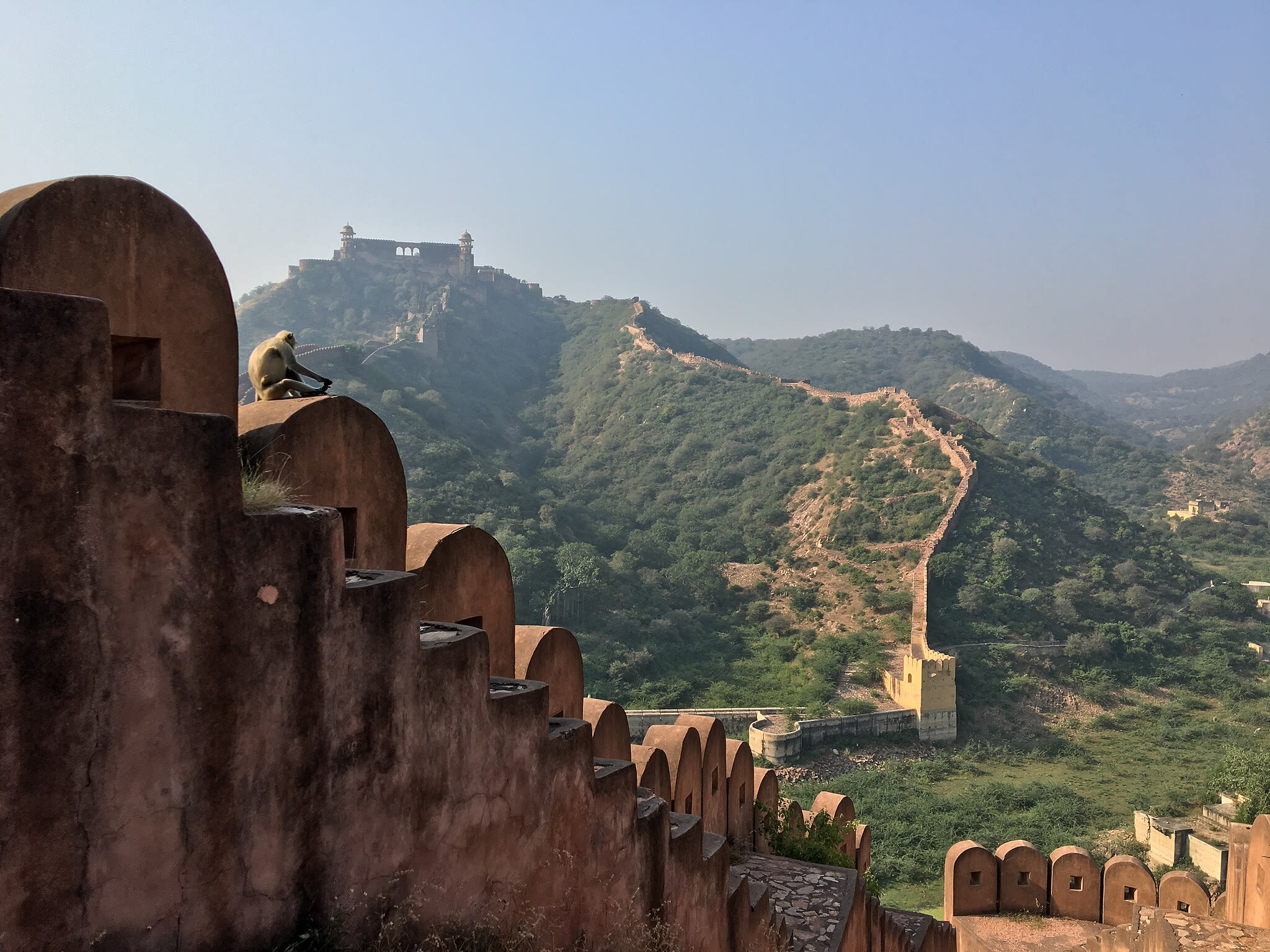
The assignment I enjoyed most was as Director General of the Archaeological Survey of India, a position I held from 1991 to 1996. I led efforts to preserve, conserve and promote India’s vast archaeological and cultural heritage. I travelled across the entire Indian peninsula: from Kashmir to Kanyakumari, Rajasthan to Bengal. The temples, museums and palaces revealed such diversity that it often felt like visiting different countries.
The role sometimes involved mild clashes with the tourism department. We focused on preserving monuments and protecting them from over-commercialisation and aggressive tourism, which had taken off by then. Having lived in Italy, I had seen how it was possible to beautifully balance heritage conservation with tourism.

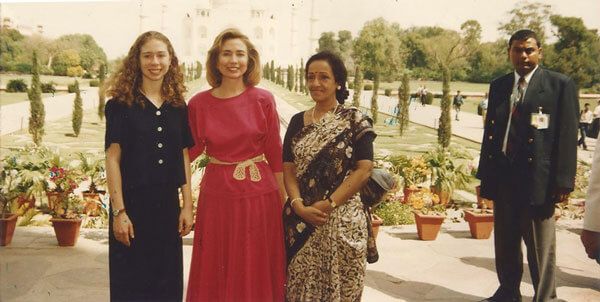
Achala with the former First Lady of the United States Hillary Clinton in front of the Taj Mahal, March 1995.
Achala with the former First Lady of the United States Hillary Clinton in front of the Taj Mahal, March 1995.
My final government role before retirement was as Education Secretary to the Government of India. I felt a sense of fulfilment that my colleagues and I, under the leadership of an erudite scientist and minister, Dr M.M. Joshi, were able to formulate and implement the Education for All Programme: the first nationwide plan to provide free elementary education to all children aged six to sixteen and bring literacy to the young and adults.

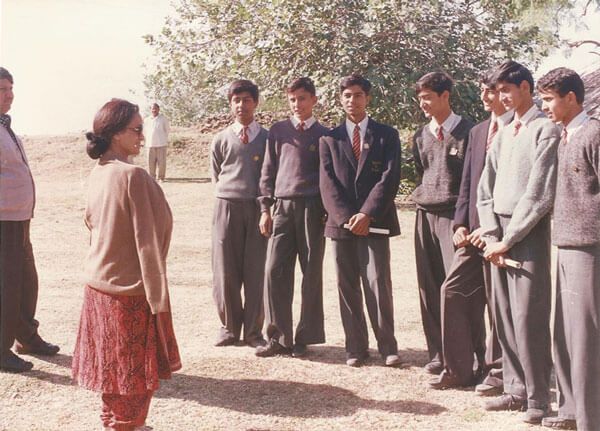
Achala as Education Secretary of India, talking to school children in Jammu and Kashmir. Image courtesy of Achala Moulik.
Achala as Education Secretary of India, talking to school children in Jammu and Kashmir. Image courtesy of Achala Moulik.
With the challenges that came with my assignments, UCL had instilled in me an approach – exemplified by the academic staff – that emphasised respect for difference, tolerance and principled disagreement, while staying true to one’s values. It taught me that you cannot sacrifice your ideals just to inch forward. That mindset gave me clarity and confidence, making it easier to face challenges without losing perspective or compromising what I believed was right.

Turning to writing
It was after my mother’s tragic passing away (she was only 52) that my parallel career as a writer really began. Losing this gentle, refined and self-effacing mother was almost soul-destroying. Writing became a distraction and softened the grief.
My husband Mohan, a brilliant and dashing civil servant, guided and supported me in my literary career. He was my best editor. It was sadly ironic that when he passed away, leaving behind three brilliant and erudite manuscripts (on the mind and computer, on famous Indologists, and his memories of Kashmir, where he had served as a Senior Adviser), I became the editor of his books, which were subsequently published and acclaimed.
For the first ten years, I wrote non-fiction, drawing on my personal interests and global perspectives, from the Russian Revolution and the Treaty of Versailles to the Spanish Golden Age and biographies of Rabindranath Tagore and Lev Tolstoy. I have authored in total 35 books on political and cultural history and biographies. I also wrote a play on Alexander Pushkin, which was performed to standing ovations in New Delhi, Moscow, and St. Petersburg. I was awarded the Pushkin Medal and the Sergei Yesenin Prize for my work on Russian history and culture.

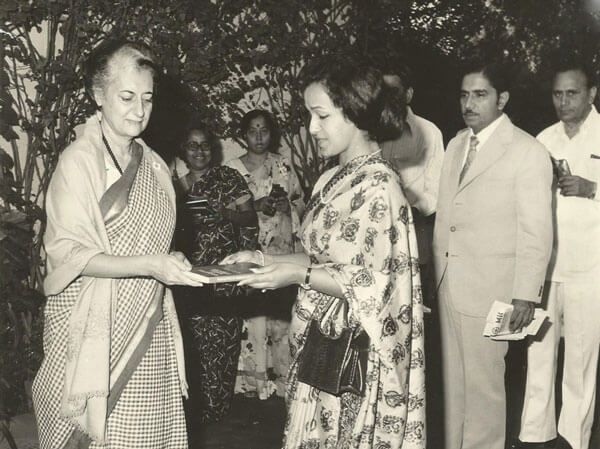
Achala presenting her first book to Indira Gandhi, former Prime Minister of India, in 1976. Image courtesy of Achala Moulik.
Achala presenting her first book to Indira Gandhi, former Prime Minister of India, in 1976. Image courtesy of Achala Moulik.
"My latest novel, 'Phantom Lovers', is set with UCL as a backdrop!"
I later turned to writing fiction. My second novel The Conquerors, a three-generation saga of the British Raj, was a best seller, and my third novel Dangerous Dispatches (about four frontline journalists in many bitter conflict zones where they find love and death) has also been widely read and acclaimed. My book on the Renaissance in many lands is now under publication.

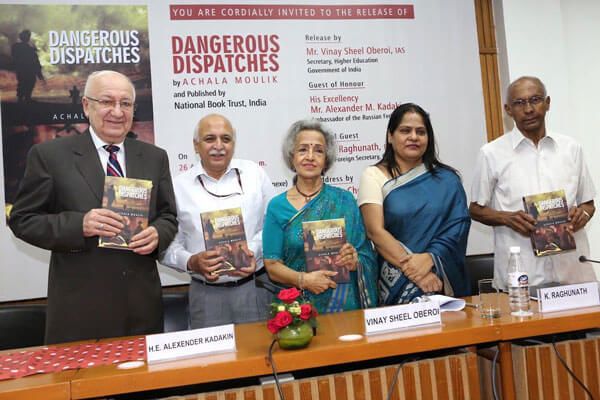
Achala at the book launch of Dangerous Dispatches. Image courtesy of Achala Moulik.
Achala at the book launch of Dangerous Dispatches. Image courtesy of Achala Moulik.
My latest novel, Phantom Lovers, is set with UCL as a backdrop! I had to feature UCL at some point! Sixty-five years later, I don’t think I’ve quite got over my magical years in London.
Achala Moulik is a former bureaucrat and author.


Portico magazine features stories for and from the UCL community. If you have a story to tell or feedback to share, contact advancement@ucl.ac.uk
Editor: Lauren Cain
Editorial team: Ray Antwi, Harry Latter, Bryony Merritt, Lucy Morrish, Alex Norton
Shorthand presentation: Harpoon Productions
Additional design support: Boyle&Perks
Follow UCL


 Built with Shorthand